
Jason Martin
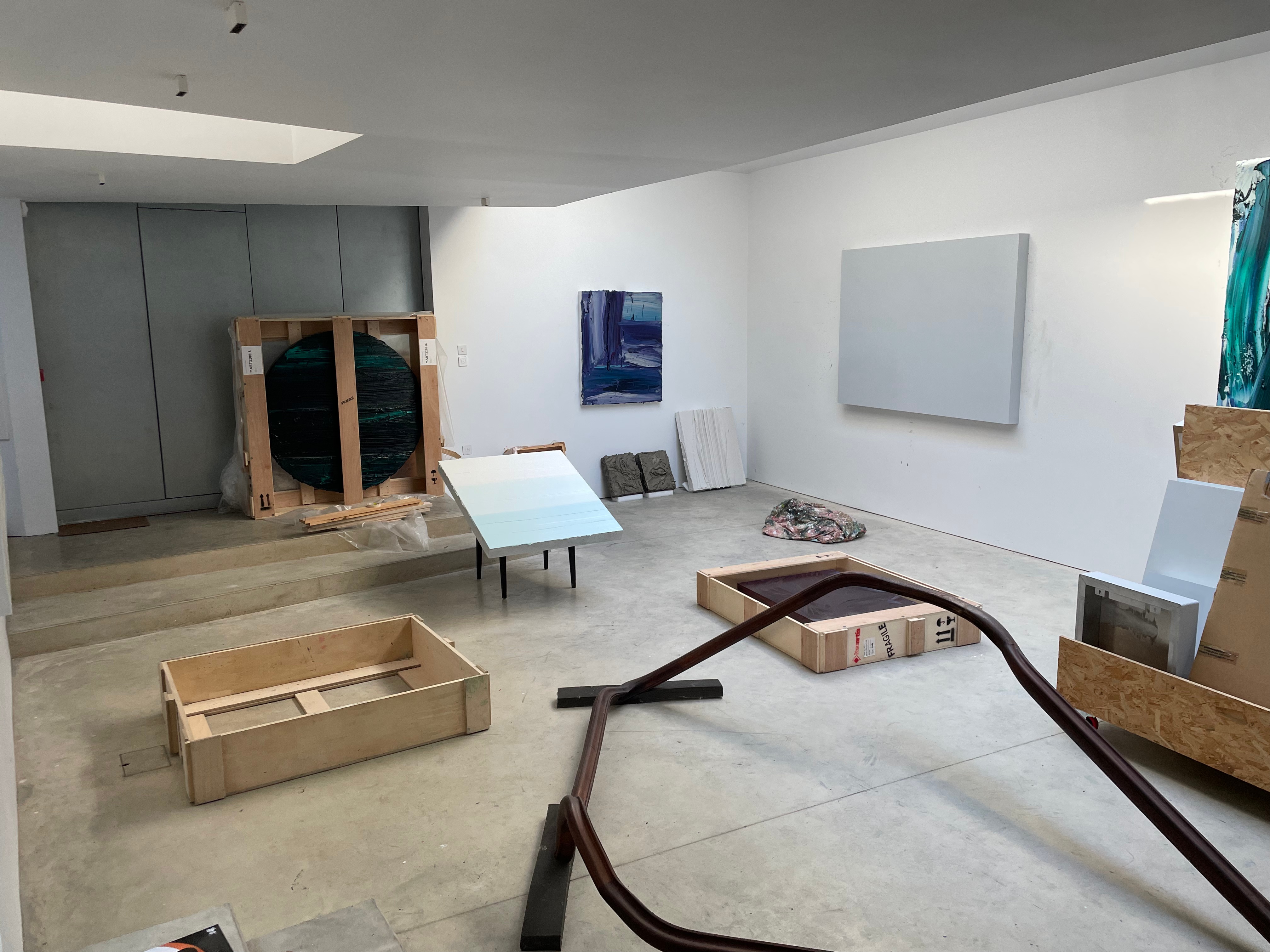
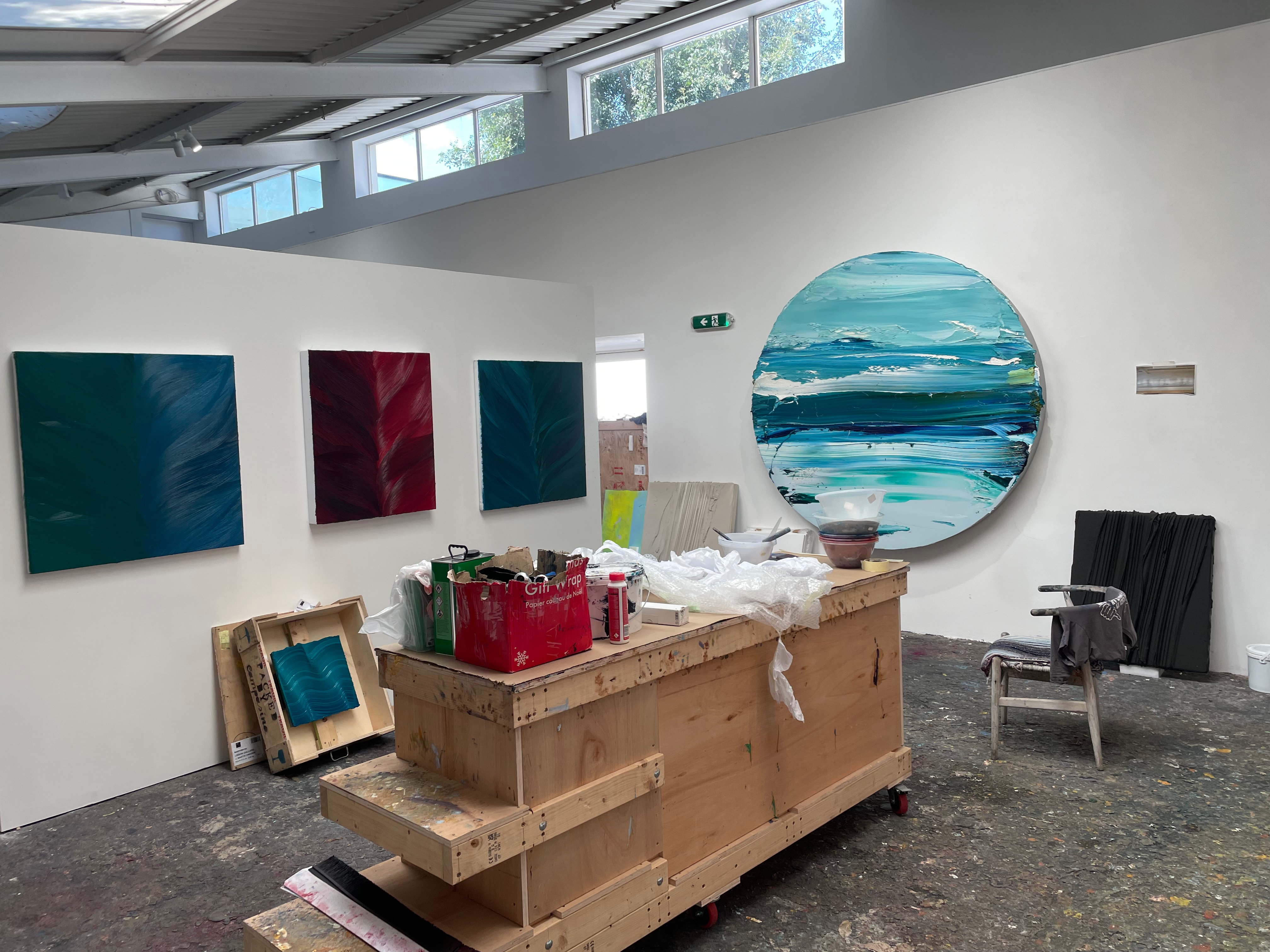
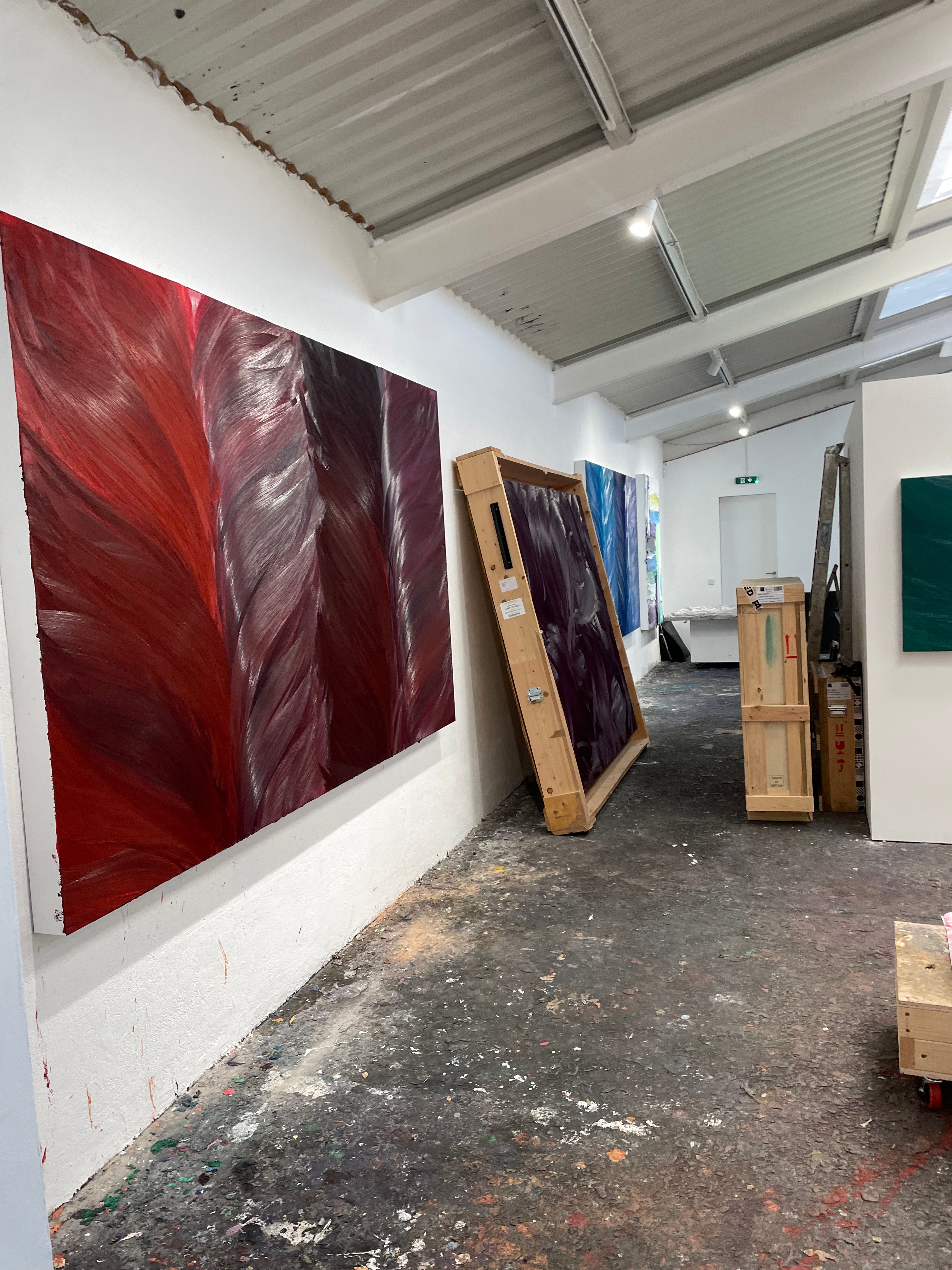
Over the Summer, I was lucky enough to be recommended for a job working as a studio assistant for the oil painter and sculptor, Jason Martin, by our screenprint technician, Ben Gooding. I will resume this position as soon as the course has finished. Jason Martin, a contemporary of Damien Hirst, is an artist based between Teddington and Portugal, creating these huge works by creating his own brushes, and painting with these beautiful emotional sweeps. I find a kinship with Jason due to the fact that a lot of his works have these ‘pseudo-horizons’, that make the pieces seem like landscapes. My main interest in Jason’s work comes from his process. Some of his pieces are painted with an impasto acrylic gel medium, that is applied thick onto the aluminium panels that he uses as surfaces. These sculpted panels are then dried and sprayed with hundreds of layers of a ‘jacket’, that he calls ‘pollinating’ the surface. The result of this is an almost flocked looking very organic base. These works are then either sprayed with rich pure pigments, or in some cases coated in gold or silver through electrolysis, as in the case of the picture on the far left. Jason’s innovative approach to creating his work really excites me, and I’m really happy to be a part of his artworks. Working in this professional space, and being introduced to Jason’s clients, galleries and other staff such as photographers is leading me to forge really exciting connections in what I was expecting to be a very lonely and scary post-MA world of art. I am also learning invaluable skills, such as how to package his artworks in crates, and am quickly becoming very good at hanging work and establishing eyelines. This work will be a very exciting step forward for me post-MA and I’m really excited to carry on working for Jason in the future.
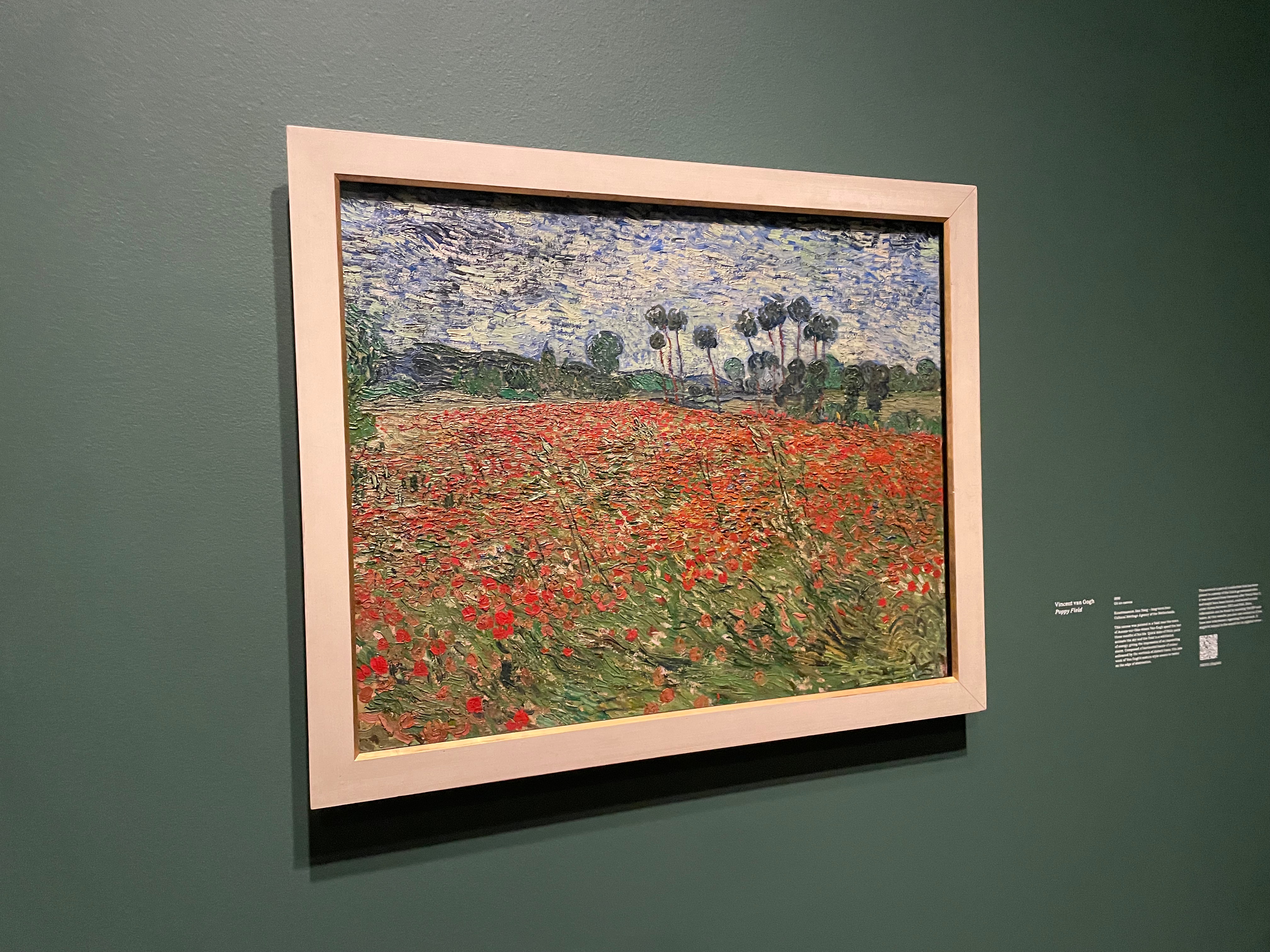


Van Gogh and Anselm Kiefer Exhibition- Royal Academy
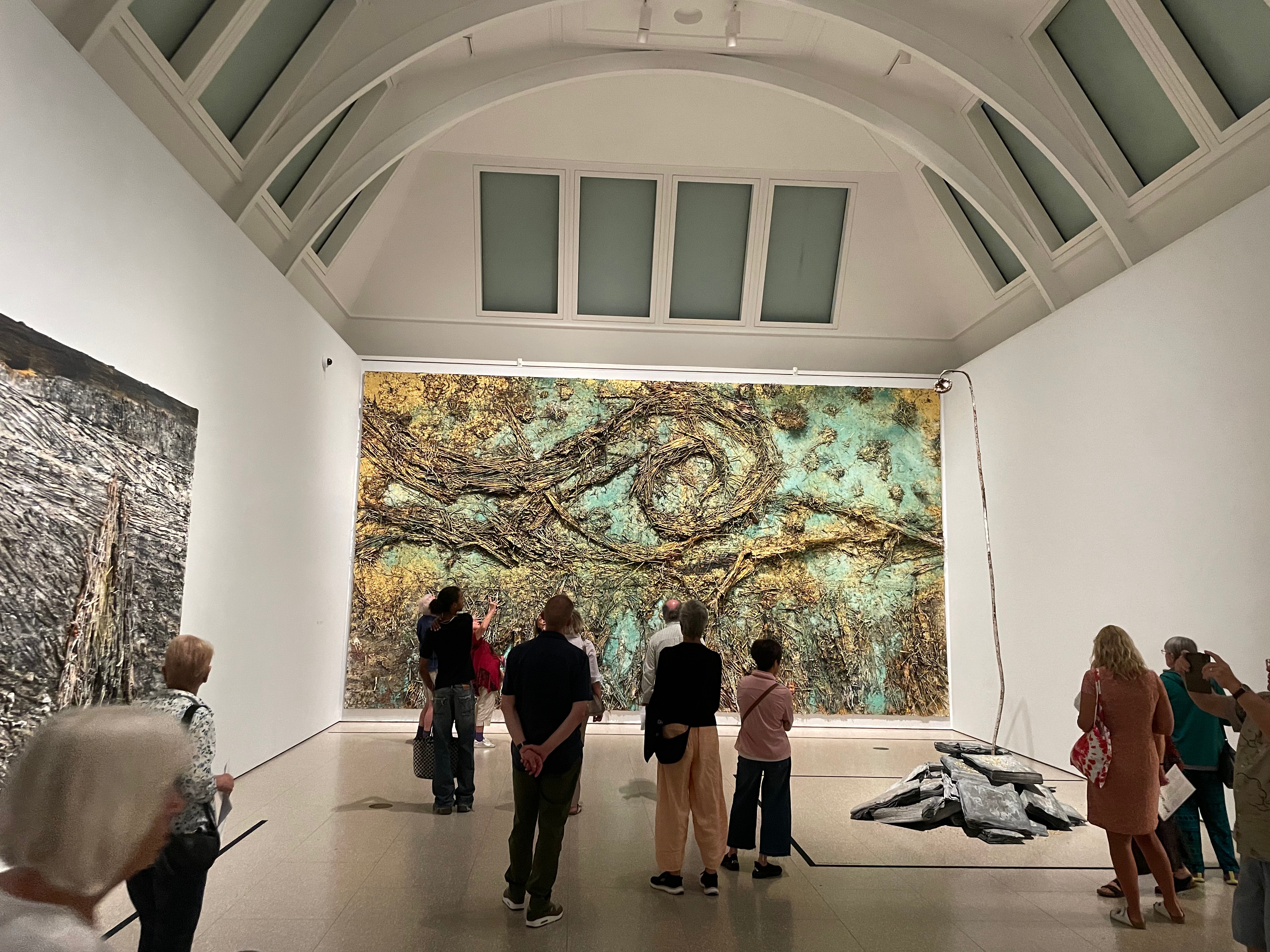
I must begin this section by admitting that I had never actually seen any of Kiefer’s work in person, and I really regretted that after seeing these beautiful pieces for the first time. The vast scale of Kiefer’s work was mind-blowing, and it’s aggression and confronting nature really embodied the idea of the Känslobild, that I speak about in my Critical Reflection section. The residue of emotion is clearly visible on these pieces, and you can almost feel the artist within these artworks, there is a darkness and an intense beauty here that is hard to describe. The looks of awe and wonder when people progressed into the final room and were confronted with Kiefer’s ‘Starry Night’ were really fantastic. This piece especially resonates with me as I believe it discusses themes similar to my own ideas surrounding the Earth and sky. The artist uses bundled wheat and chaff to create Van Gogh’s swirl here, really anchoring the heavens to the ground. Van Gogh’s work was a beautiful accompaniment to Kiefer’s, the pieces selected really contain that melancholy that Van Gogh is infamous for. Even in bright colours, he still manages to impregnate his work with this pervading gentle sadness. Van Gogh is another artist that really leaves an emotional residue behind on his work, and this is evident in those lovely post-impressionistic marks he leaves behind on the canvas, giving everything this slow, almost psychedelic movement. I think this exhibition was an invaluable lesson in scale, Kiefer’s work is brutal and massive, and evokes these primordial emotions of awe, fear and sadness. Meanwhile Van Gogh’s smaller works are more intimate, and have this quiet sadness to them. These notions are something that I really took forward in creating my own works. My large scale monoprints are intended to convey this similar feeling of immersion, and ‘being present’ in these landscapes, while my smaller mezzotints are intended to be these little moments of quiet melancholy, reflection and introspection.

Birdbath Group-
I was really happy to be invited to take part in a session of Birdbath group, by some of my friends on MA Sculpture. Just before the PV of the Degree Show, a group of students walked around the college and we discussed our work and received feedback in a cross-pathway setting. It was really nice to have critiques from artists working in various media from wide backgrounds. I think that this is something we haven’t had a massive opportunity to do on the course, except for our exhibition at Millbank last year (which was also really helpful to get a breadth of opinions from artists working in very different ways), so it was a lovely opportunity. It was also interesting to make thematic connections with others about our work.
 Ollie Norris